Face Shape Detector
Upload one photo. Our AI measures your forehead, cheekbones, and jaw to identify your face shape and suggest flattering styles.
Free · No sign-up · Your photo isn't stored
Face straight on, hair pulled back, even lighting
How the face shape detector works
Face shape is determined by the relative widths of three horizontal zones and the overall length-to-width ratio of your face. Here's how the AI reads yours from a single photo.
Map the key widths
The AI locates your facial landmarks and measures the approximate widths at the forehead, cheekbones (the widest point of the midface), and jaw.
Calculate proportions
It computes the face length-to-width ratio and compares the three horizontal widths against each other to identify which zone dominates.
Match to a shape profile
The proportions are matched against the 7 canonical shapes (oval, round, square, heart, oblong, diamond, triangle) and the closest matches are returned with scores.
The 7 face shapes explained
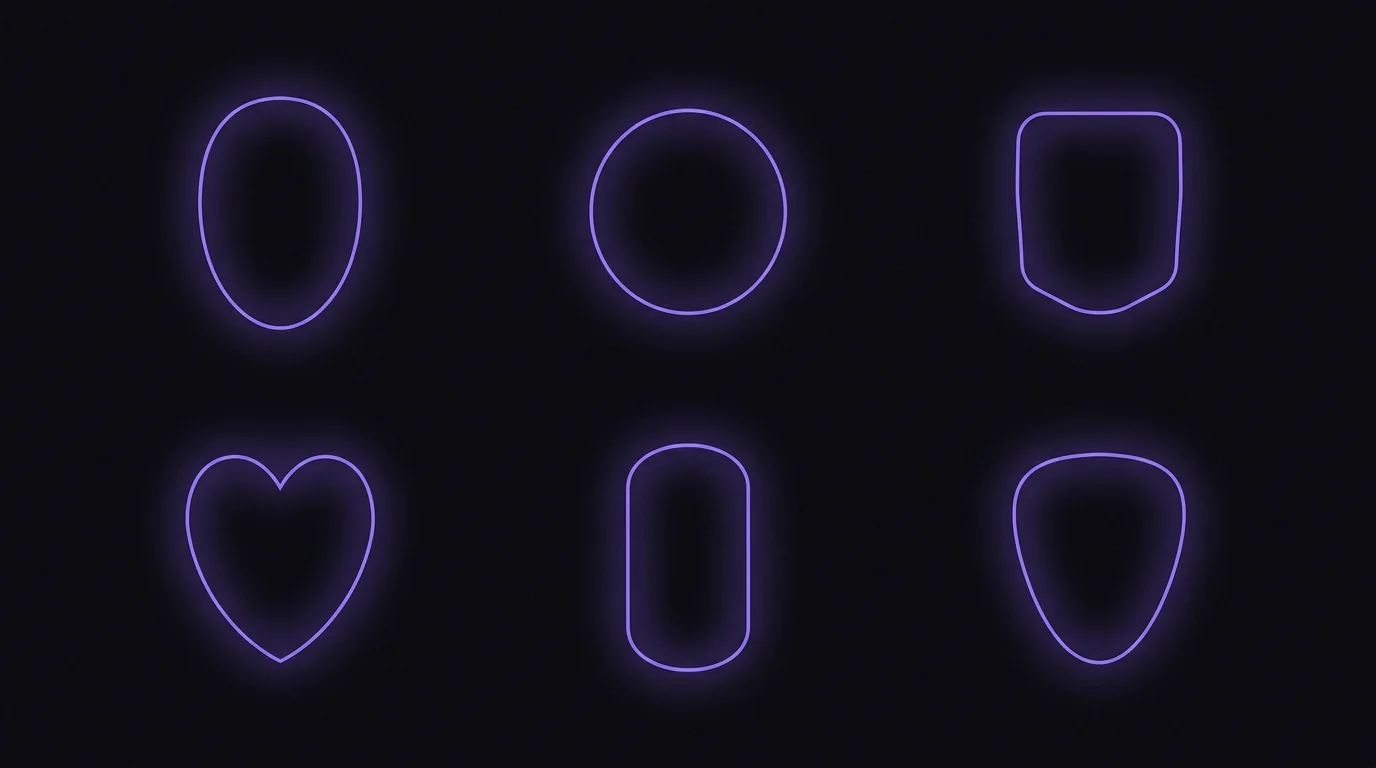
Each shape is defined by a combination of horizontal proportions and overall face length. Real faces sit on a spectrum — most people blend two shapes.
Oval
Face length is noticeably longer than width. The forehead is slightly wider than the jaw, and the cheekbones are the widest point. The jaw has a gentle, rounded taper. Often considered the most balanced face shape.
Round
Face length and width are roughly equal, with full cheeks and a soft, rounded jaw. The forehead and jaw tend to be similar widths with no sharp angles. The overall silhouette is circular.
Square
Face length and width are roughly equal, but the forehead, cheekbones, and jaw are all similarly wide. The jaw is angular with a defined, sharp line — the defining feature of this shape.
Heart
The forehead is the clearly widest part. Width tapers through the cheekbones down to a narrow, pointed or lightly pointed chin. Often accompanied by a widow's peak hairline.
Oblong
Significantly longer than wide — an elongated oval. Forehead, cheekbones, and jaw are all similar widths with little tapering. Sometimes called a rectangle shape. The length is the dominant visual.
Diamond
The cheekbones are the clear, dominant widest point. Both the forehead and the jaw are narrow, creating a diamond or rhombus silhouette. Angular cheekbones are the standout feature.
Triangle
The inverse of heart — the jaw is the widest part, with width tapering upward to a noticeably narrower forehead. Also called a pear shape. The lower third dominates the silhouette.
How to measure your face shape by hand
You can approximate your face shape without a photo using a soft measuring tape (or a piece of string and a ruler). Take four measurements:
Forehead width
Measure across your forehead at its widest point — roughly halfway between your hairline and eyebrows.
Cheekbone width
Place the tape from the outer corner of one eye to the outer corner of the other, following the curve of your cheekbones.
Jaw width
Measure across your jaw at its widest point, roughly from the angle of one side to the angle of the other.
Face length
Measure from the center of your hairline straight down to the tip of your chin.
Compare the four numbers: if your face length is the largest and your cheekbones are widest, you're likely oval. If length and width are close and your jaw is angular, you're likely square. Use the 7-shape descriptions above to pinpoint your closest match.
Why face shape matters for hair, glasses, and grooming
Face shape gives stylists and barbers a quick structural read so they can suggest looks that create visual balance. Here's the underlying logic.
Hairstyles
The goal is usually to move the silhouette toward an oval — the most balanced shape. Round faces benefit from height; oblong faces benefit from side volume; square faces from softening at the corners.
Glasses frames
Frame shape contrast works better than match. Round faces look sharp in angular frames. Square faces soften with round or oval frames. Diamond faces suit frames that add width at the forehead.
Grooming and contouring
Beard shape, contouring, and brow styling can all reinforce or soften structural features. A fuller beard at the chin elongates a round face; a tapered beard softens a square jaw.
These are guidelines, not rules. Many people with "non-oval" shapes look great in styles that technically "don't work" for them. Knowing your shape gives you a starting point, not a constraint.
Go deeper with the Symmetry IQ app
Face shape is one part of the picture. The Symmetry IQ app scores your facial symmetry across 8 metrics, tracks your progress over time, and builds a personalized daily routine to help you look and feel more balanced.

Face shape detector — FAQ
How does the face shape detector work?
Upload a front-facing photo and our AI analyzes the relative widths of your forehead, cheekbones, and jaw, along with the face length-to-width ratio. It compares these proportions against the 7 canonical face shapes — oval, round, square, heart, oblong, diamond, and triangle — and returns your closest match along with the top 3 nearest shapes and key measurements.
What are the 7 face shapes?
The 7 commonly recognized face shapes are oval (balanced, cheekbones widest, gently tapered jaw), round (similar length and width, soft jaw), square (angular jaw matching the forehead width), heart (wide forehead tapering to a narrow chin), oblong (significantly longer than wide), diamond (narrow forehead and jaw with prominent wide cheekbones), and triangle (jaw is the widest part, tapering up to a narrower forehead).
Is the face shape detector free?
Yes, the face shape detector is completely free with no account required. Upload one photo and get your result instantly. Your photo is analyzed and then discarded — it is not stored on our servers.
How do I take the best photo for an accurate result?
Face the camera directly from straight ahead — no tilt or turn. Use even, diffused lighting (facing a window works well). Pull your hair back so your forehead and jaw outline are clearly visible. Wear a neutral expression. The more your full face outline is visible, the more precise the measurement.
Can two people have the same face shape but look very different?
Absolutely. Face shape is just one dimension of facial structure — it describes the overall silhouette. Two people can both have oval faces but differ enormously in features, proportions, symmetry, and bone structure. Think of face shape as a broad category, not a definitive description of how your face looks.
Does knowing my face shape actually help with haircuts and glasses?
Yes, it gives your barber or optician a starting framework. The traditional principle is to choose styles that add visual balance — elongating round faces, softening square jaws, adding width to oblong faces, and so on. That said, these are guidelines, not rules. Personal style and what you like should always come first.
My result says oval but I think I look more square. Why?
Face shape sits on a spectrum rather than in hard-walled boxes. A single photo at a particular angle and with a particular expression can shift the reading slightly. The AI also shows you the top 3 closest shapes and their match scores — if oval and square both score high, you likely sit between the two. Try a second photo straight-on with hair pulled back for a more consistent result.