How Old Do I Look?
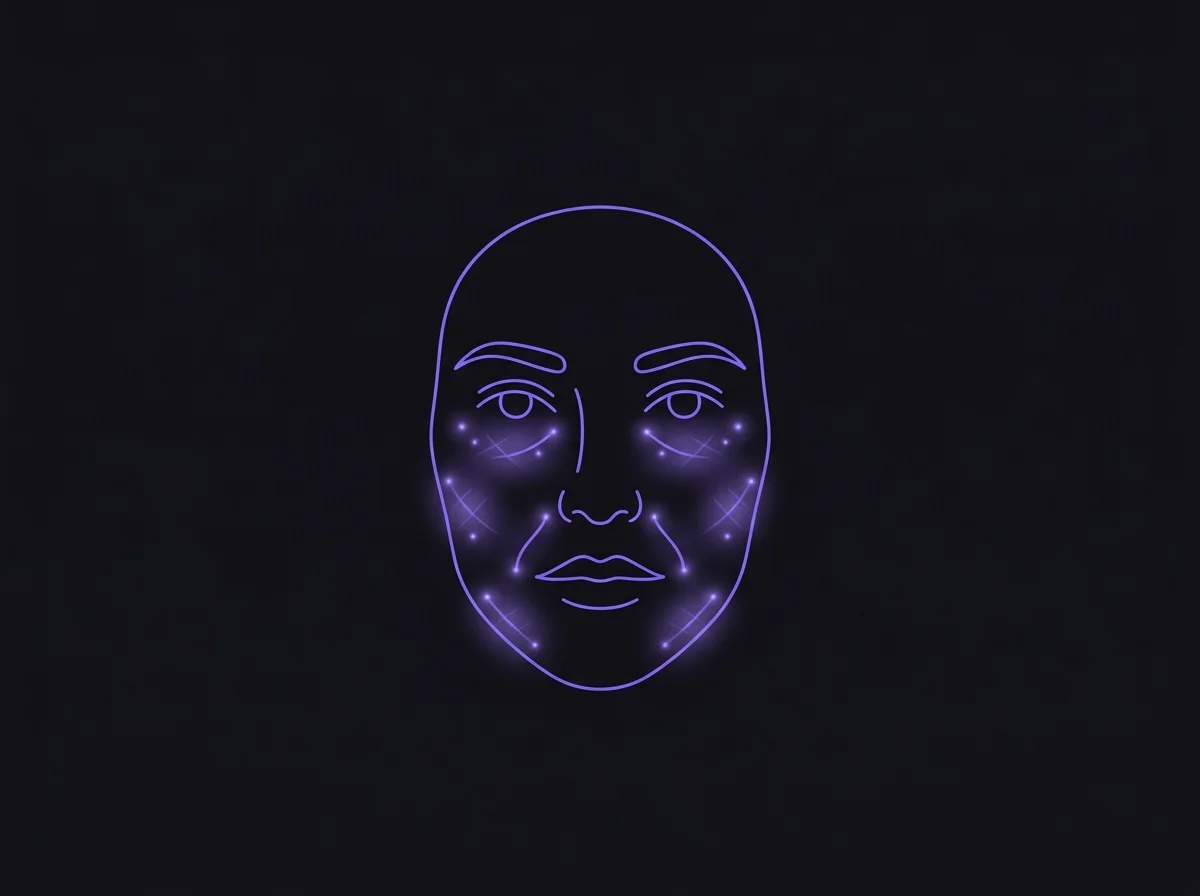
Upload one selfie. Our AI estimates the age you appear — analyzing skin clarity, under-eye area, facial volume, and jawline definition — in seconds.
Free · No sign-up · Your photo isn't stored
Face straight on, even lighting, neutral expression
How the age estimator works
Perceived age is driven by four key visual signals. Here's what our AI analyzes from your selfie.
Skin Clarity
Texture evenness, pore visibility, pigmentation, and overall skin health all strongly influence how young a face reads.
Under-Eye Area
Dark circles, puffiness, hollowing, and fine lines under the eyes are among the strongest age cues in a photo.
Facial Volume
Full cheeks and a plump mid-face read as youthful. Volume loss and hollowing are key signals of age progression.
Jawline & Contour
A defined jawline and clear chin-to-neck distinction read younger. Softening or jowling pushes estimates upward.
What makes a face look older or younger?
Perceived age is the result of several overlapping signals. Most of them move in the same direction — and some are more in your control than you think.
Skin clarity & texture
Clear, even-toned skin reads youthful because it signals health. Uneven pigmentation, visible pores, and rough texture all age the face in a photo.
Under-eye shadows
Dark circles and hollowing under the eyes are one of the first features people subconsciously read when guessing age — and one of the most responsive to sleep and hydration.
Volume loss
Cheek fullness and mid-face plumpness are strong youth cues. Volume loss — from aging, weight change, or chronic dehydration — hollows the face and adds years.
Jawline definition
A clean jaw-to-neck transition reads younger. Softening of the jawline or early jowling shifts perceived age upward even when everything else reads well.
Skin hydration
Well-hydrated skin reflects light evenly and minimizes the appearance of fine lines and texture — one of the fastest ways to shift how your face reads in a photo.
Hair & brows
The AI focuses on facial skin signals, but sparse or thinning brows and hair at the temples are strong perceived-age cues that humans pick up on instantly.
Why two people the same age look different
Chronological age and perceived age diverge because the skin and face respond to inputs, not just the clock. Genetics set the ceiling — some people age slower structurally, full stop. But lifestyle factors determine how close you get to that ceiling.
Sleep is the biggest lever most people underestimate. Chronic sleep debt elevates cortisol, which degrades collagen and drives fluid retention under the eyes — two of the strongest age signals in a photo. Consistent, quality sleep is one of the cheapest skincare interventions available.
Sun exposure is the largest external driver of skin aging. UV radiation breaks down collagen and elastin far faster than intrinsic aging alone. Daily SPF use — even on low-sun days — measurably slows the process over years. The difference between a protected and unprotected face of the same age is often visible from across a room.
Skincare consistency, hydration, and diet all layer on top. No single habit is a magic fix, but the cumulative effect of several good habits over time is real and visible.
What you can change vs. what you can't
Knowing the difference helps you direct effort where it actually moves the needle.
Changeable
- Skin hydration and texture (consistent moisturizer + SPF)
- Under-eye area (sleep quality, reduced sodium, eye cream)
- Facial volume (hydration, body weight, sleep-position habits)
- Muscle tone and definition (facial exercise, posture, mewing)
- Puffiness and inflammation (diet, alcohol, sleep)
- Pigmentation and evenness (SPF, targeted serums)
Fixed or structural
- Bone structure and facial proportions
- Genetic baseline aging speed
- Intrinsic collagen decline rate
- Eye shape and orbital depth
- Ethnicity-linked skin characteristics
- Hairline position (without intervention)
The Symmetry IQ app builds a personalized daily routine around the changeable factors — so you can track whether your habits are moving the needle over time.
Accuracy & privacy
How accurate is it?
Under good lighting and a clear front-facing photo, the estimated age is typically within 3–5 years of how others would guess your age. Accuracy drops with harsh lighting, heavy shadows, strong angles, or filters. Use it as a directional signal, not a precise measurement.
Your photo isn't stored
Your image is sent securely over HTTPS, processed in memory for a single analysis, and immediately discarded. No photo is saved, logged, or used for model training. There is no account required.
Not a medical tool
This tool estimates perceived age for wellness and self-improvement purposes only. It is not a diagnostic or medical device. Do not use these results to make health or medical decisions.
What affects the result
Lighting quality, photo angle, image resolution, expression, and even skin hydration that day all shift the result. For the most consistent output, use a front-facing photo in soft, even, natural light with a neutral expression.
Track how you look over time
This test is a one-time snapshot. The Symmetry IQ app scores 8 facial metrics, tracks your progress, and builds a personalized daily routine around the habits that actually shift how your face reads.

How old do I look — FAQ
Is this AI age test accurate?
The tool estimates your PERCEIVED age — how old you appear from a photo — not your chronological age. Perceived age is shaped by skin quality, lighting, expression, and facial volume. Under good lighting with a clear front-facing photo, the estimate is usually within a few years of how others would guess your age. Results vary with photo quality.
Can AI really guess my age from a photo?
AI models trained on large face datasets are reasonably good at estimating perceived age — often within 3–5 years under consistent conditions. Our tool analyzes four factors: skin clarity, under-eye area, facial volume, and jawline definition, which together are the strongest visual cues that humans use to judge age.
Why does my estimated age vary between photos?
Perceived age is highly sensitive to lighting, angle, expression, and even hydration. A photo taken in harsh overhead light can read 5+ years older than one taken in soft natural light. For the most consistent result, use a front-facing photo in even, diffuse lighting with a neutral expression.
What affects perceived age the most?
Skin clarity and under-eye area are the biggest drivers — uneven texture, dark circles, or puffiness can add years in a photo. Facial volume (cheek fullness) and jawline definition are close behind. Lifestyle factors like sleep, hydration, sun exposure, and skincare have real, measurable effects on all four.
Is my photo stored?
No. Your photo is sent securely for a single analysis and is not stored, logged, or used for training. The image is processed in memory and discarded immediately after the result is returned.
How is this different from a medical or clinical age assessment?
This is a wellness tool, not a medical device or diagnostic instrument. It estimates perceived facial age from a single photograph using an AI model. Clinical assessments use standardized lighting, high-resolution imaging, and often multiple data points over time. Do not use this tool to make medical decisions.